
Gut-directed hypnotherapy
What is Hypnosis — and How Does It Help IBS?
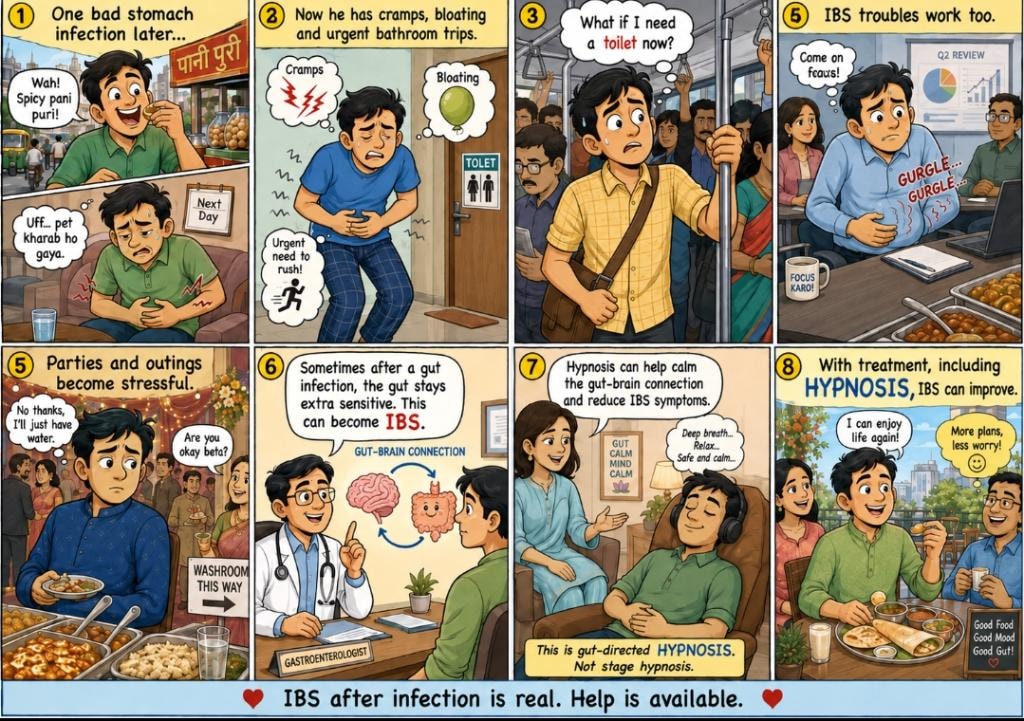
Hypnotherapy for IBS is not stage magic or mind control. It is a clinically validated, NICE-recommended psychological therapy that works directly on the gut-brain axis — the same pathway that drives IBS symptoms.
How Hypnosis Works in IBS
Gut-directed hypnotherapy (GDH) targets the neurological mechanisms underlying IBS rather than masking symptoms. During a session, a trained therapist guides you into a deeply relaxed, focused state — and uses specific suggestions to retrain how your brain and gut communicate.
The Gut-Brain Axis — the Target of Treatment
IBS is now understood as a disorder of gut-brain interaction (DGBI). The enteric nervous system — sometimes called the 'second brain' — contains over 500 million neurons and communicates bidirectionally with the central nervous system via the vagus nerve and the hypothalamic-pituitary-adrenal (HPA) axis.
In IBS, this communication becomes dysregulated. The brain amplifies pain signals from the gut (visceral hypersensitivity), and the gut responds to psychological stress with abnormal motility. Hypnotherapy intervenes at this interface — calming central sensitisation and normalising gut reactivity.
Under hypnosis, the brain enters a state of heightened neuroplasticity. Therapeutic suggestions delivered in this state can alter the way the anterior cingulate cortex — the brain's pain-processing hub — responds to gut signals, reducing the amplification that causes IBS pain.
Common misconceptions — what hypnosis is NOT
What Happens in a Session
Induction
The therapist guides you into a calm, focused state using progressive relaxation, breathing techniques, or imagery. You remain fully conscious and in control throughout.
Deepening
The relaxation is deepened to increase receptivity. This is not sleep — it is a state of focused attention similar to being absorbed in a book or a film.
Gut-directed suggestions
The therapist delivers specific therapeutic suggestions — imagery of a calm, comfortable gut, reduced pain sensitivity, normalised bowel function — tailored to your IBS subtype and symptoms.
Ego strengthening
Positive suggestions build confidence in your body's ability to function normally, countering the anxiety and hypervigilance that perpetuate IBS symptoms.
Emergence and self-practice
You are gently brought back to full alertness. Most programmes include audio recordings for daily self-hypnosis practice between sessions, which significantly improves outcomes.
The Evidence Base
Gut-directed hypnotherapy is one of the most thoroughly researched psychological treatments for IBS. It is recommended by NICE (National Institute for Health and Care Excellence) and has been studied in randomised controlled trials for over 35 years.
Key Clinical Studies
The landmark RCT. 30 refractory IBS patients treated with gut-directed hypnotherapy showed dramatic improvement vs controls. This paper established the field.
Long-term follow-up confirmed that 100% of responders maintained improvement at 18 months, with many remaining well at 5 years.
Standardised hypnotherapy protocol (the North Carolina protocol) showed 73% response rate in a community-based sample, demonstrating generalisability beyond specialist centres.
RCT comparing gut-directed hypnotherapy to low-FODMAP diet. Both were equally effective at 6 months; hypnotherapy showed superior maintenance at 6-month follow-up.
Group hypnotherapy (7 patients per group) was as effective as individual therapy, making treatment more accessible and cost-effective.
All studies available via PubMed (pmc.ncbi.nlm.nih.gov). Search 'gut-directed hypnotherapy IBS' for the full evidence base.
What to Do — Accessing Hypnotherapy for IBS
If you have a confirmed IBS diagnosis and have tried first-line treatments without adequate relief, gut-directed hypnotherapy is a clinically appropriate next step. Here is how to access it.
Confirm your diagnosis
Ensure you have a formal IBS diagnosis from a doctor using Rome IV criteria, and that red-flag symptoms have been excluded. Hypnotherapy is for confirmed IBS — not uninvestigated gut symptoms.
Speak to your GP or gastroenterologist
Ask for a referral to a gut-directed hypnotherapist or a psychological therapies service that offers GDH. In the UK, some NHS trusts offer this via gastroenterology departments.
Find a qualified therapist
Look for a therapist trained specifically in gut-directed hypnotherapy — not general hypnotherapy. In the UK, the British Society of Clinical and Academic Hypnosis (BSCAH) maintains a register of medically trained practitioners.
Understand the commitment
A standard course is 6–12 weekly sessions of 30–60 minutes each. Daily self-hypnosis practice (10–20 minutes using audio recordings) between sessions significantly improves outcomes. Results typically begin within 4–6 sessions.
Consider digital or group options
Research supports group hypnotherapy (up to 8 patients) as equally effective as individual sessions. Digital and app-based GDH programmes (such as Nerva) have also shown efficacy in RCTs for those without access to a therapist.
Is it right for you?
May not be suitable if:
Read the personal stories of Amrit and Ani — two people who completed a course of gut-directed hypnotherapy for IBS.
Read Amrit's storyReady to Learn More?
Explore the personal stories of people who have been through gut-directed hypnotherapy, or read the full research evidence.